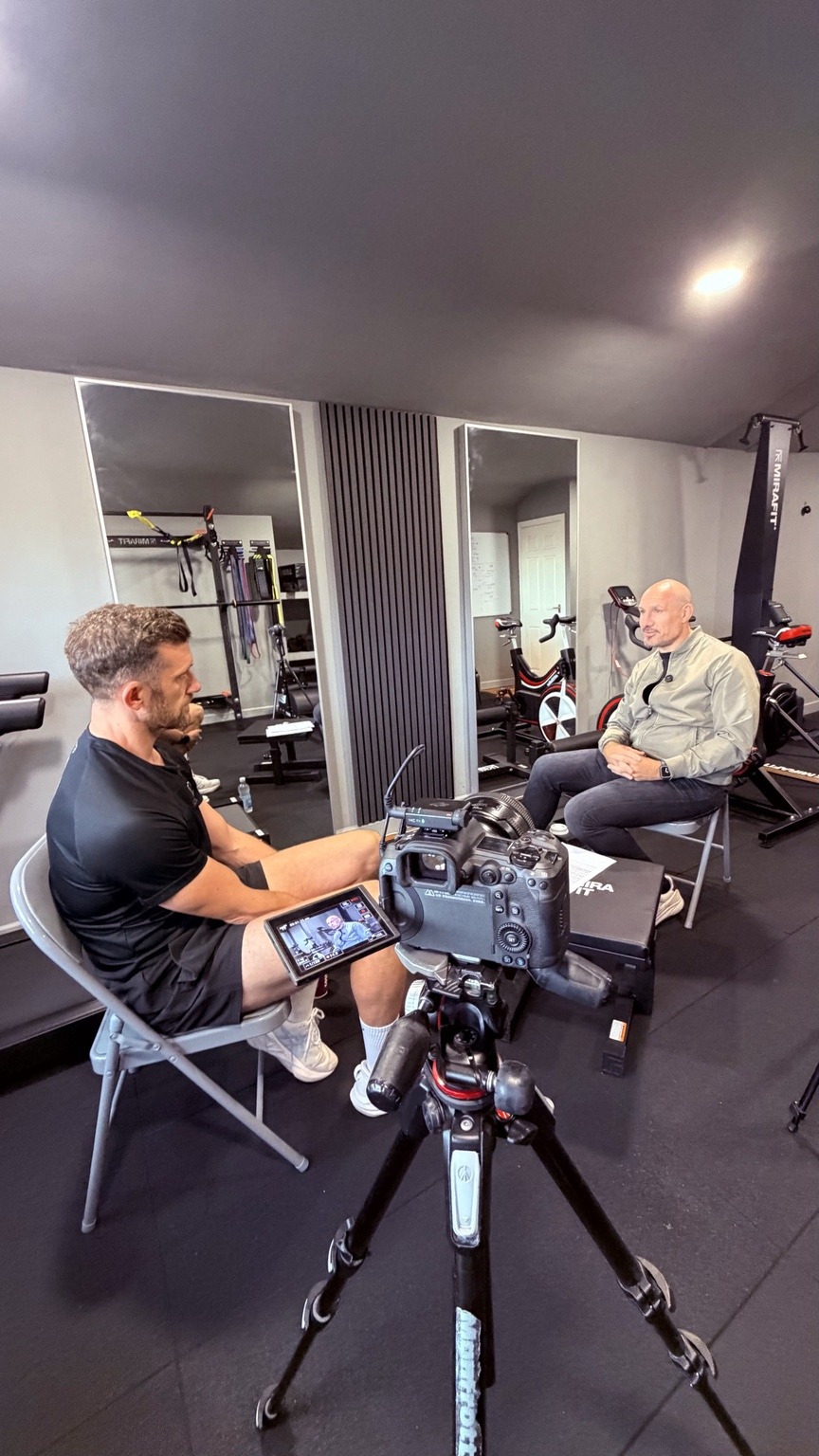

For founders and service business owners who care about their clients and need their business to work for them too.
By Andy Hosgood | Unlock with Coaching
You know your prices need a review. Yet the fear of raising prices keeps putting that conversation off.
You open the email. Write the new fee. Then imagine the reply.
“That’s expensive.”
“We’ve been with you for years.”
“Have you forgotten about people like us?”
So you close the draft. You tell yourself you will review it next month.
If you sell your time, expertise or care, a price increase can feel like asking someone to judge you. Your name is on the business. You know your clients. You want to keep their trust.
But a fee also needs to support the service you promise.
Pricing confidence means making a considered decision, explaining it clearly and listening to the response. You can do that while still feeling nervous.
Why the fear of raising prices can feel so personal
A service relationship involves more than a transaction. Clients may share worries with you. They may rely on your advice. You may have supported them through difficult moments.
As a result, changing the price can feel like changing the relationship.
You might recognise one of these thoughts:
- “If they cared about my work, they would agree.”
- “If I cared about them, I would keep the price the same.”
- “If someone leaves, I must have got it wrong.”
These are useful prompts for reflection. They are not diagnoses, or findings that apply to every founder.
Research on service negotiations does show that price discussions can carry relationship concerns. Alavi and colleagues studied almost 1,300 customers across five studies. Their findings suggest that service characteristics shape customers’ willingness to negotiate. Some customers worry that negotiation could damage the relationship or service quality.[1]
However, this was research on customers. It does not establish why owners fear announcing a price rise.
The practical implication is modest: make room for the human side of the conversation. A client can question a fee and still respect your work.
What the evidence says about price increases
Clients care about fairness
Kahneman, Knetsch and Thaler’s classic research used telephone surveys to explore judgments about hypothetical business decisions. Respondents generally viewed increases that protected a business against higher costs more favourably than increases that exploited a sudden surge in demand.[2]
This research is older and scenario-based. It cannot predict your clients’ responses. However, it helps explain why the reason behind a price change can matter.
A later study by Homburg, Hoyer and Koschate examined reactions to price increases. It found that the size of the increase, perceived fairness of the motive and customer satisfaction influenced repurchase intentions.[3]
These were intentions, rather than a guarantee of future buying behaviour.
So a thoughtful explanation helps clients understand your decision. It does not remove their right to decide the new price is beyond their budget.
Your fee does not measure your worth
A price reflects an offer within a market. It also reflects costs, capacity, demand, alternatives and the value a client sees.
It cannot tell you how much you matter as a person.
For example, a client may value your service and still be unable to afford it. Another may prefer a cheaper option with fewer features. Neither response gives you a complete verdict on your ability.
At the same time, feedback can contain useful commercial information. If several clients question the same part of your offer, investigate it.
Keep your self-respect. Stay curious about the business evidence.
How pricing connects with work-life balance
For a service business, time is a limited resource.
If the income from each appointment or project is too low, you may try to make the numbers work by taking on more work. That can mean extra evenings, fewer breaks or less time with people outside the business.
This is a possible business pattern, rather than proof that low prices cause burnout.
Wach and colleagues followed 55 entrepreneurs in a diary study. They found that work demands were linked with evening work-related thinking, reduced mental detachment and poorer wellbeing the next morning.[4]
The study did not test price increases. It supports taking recovery seriously when you review how your business operates.
Ask yourself:
“Does this price work only because I keep giving the business time I never planned to give?”
However, higher prices alone will not create balance. You also need to decide what happens to any extra income or capacity.
You might protect a free evening, reduce a rushed diary, improve staffing or build a financial buffer. Otherwise, the business can simply expand into the space you hoped to regain.
Build pricing confidence with a clear review
The following steps are practical suggestions informed by the research. They are not a tested programme for overcoming pricing anxiety.
1. Start with the full cost of delivery
Count the work around the visible service.
For example, a one-hour appointment may also involve preparation, notes, follow-up and booking administration. A project may include revisions, travel or client calls.
Review:
- Direct delivery costs and overheads.
- Paid and unpaid time.
- A realistic number of appointments or projects.
- Owner pay and a sustainable profit margin.
- The quality and scope clients actually receive.
Use your accountant or financial adviser where needed. A competitor’s fee can provide context, but their costs and business model may differ from yours.
2. Describe the value without promising miracles
What does your service help a client do?
Perhaps it offers clearer decisions, reliable support, skilled assessment or time saved. Be specific about what you deliver and careful about outcomes you cannot guarantee.
For example:
“Your monthly package includes our meeting, preparation and agreed follow-up support.”
That gives a client more useful information than “I know my worth.”
3. Test the decision against realistic scenarios
Avoid assuming every client will stay. Equally, avoid treating your worst fear as a forecast.
Consider what happens if demand stays steady, drops slightly or falls more sharply. Look at income, costs and available time in each case.
Here is a simple illustration:
| Scenario | Appointments | Fee | Revenue | Delivery cost at £25 per appointment | Contribution before fixed costs |
|---|---|---|---|---|---|
| Current | 100 | £80 | £8,000 | £2,500 | £5,500 |
| Higher fee, same volume | 100 | £88 | £8,800 | £2,500 | £6,300 |
| Higher fee, lower volume | 90 | £88 | £7,920 | £2,250 | £5,670 |
These invented figures show why revenue and contribution are different. They do not predict your results. Fixed costs, tax, staffing arrangements and the value of freed time also matter.
4. Choose boundaries before the conversation
Decide what you can offer if a client raises concerns.
Perhaps you have a smaller package or a different service frequency. You may also choose a limited concession policy that the business can afford.
However, avoid creating a different discount each time you feel uncomfortable. That can make pricing harder to explain and manage.
If access matters to your mission, plan for it deliberately. For example, you could budget for a limited number of supported places. Caring for clients and planning for viability can sit together.
5. Practise saying the new price
Say it aloud with a trusted peer or coach.
“From [date], the fee for [service] will be [amount].”
Then pause.
Notice any urge to apologise, add free work or reduce the fee before the other person has responded.
The aim is to become familiar with the conversation. You do not need to erase every uncomfortable feeling before you act.
How to tell clients about a price increase
Use a clear message with five parts: the change, the date, an honest reason, what it means for their service and a way to ask questions.
Give clients time to plan. Check existing agreements and any applicable notice requirements before choosing the date. There is no universal notice period for every service business.
Client email template
Subject: An update to your [service] fee from [date]
Hi [name],
Thank you for continuing to work with [business name].
From [date], the fee for [specific service] will change from [current fee] to [new fee].
We have reviewed our fees to reflect [brief, accurate reason]. This supports the continued delivery of [specific service or standard].
Your service will include [clear scope]. [Explain how existing bookings or agreements will be handled, where relevant.]
If you have any questions about how this affects you, please contact me through [channel].
Thank you for your continued trust.
Best wishes,
[name]
Adapt this to the facts. State the total payable clearly, including applicable taxes. Remove any claim about increased costs or improved service that you cannot support.
You can sound warm without writing a long defence of the decision.
What if a client objects?
First, listen. An objection can mean “I need more information”, “I cannot afford this” or “I do not see enough value”.
Those are different conversations.
You could ask:
“Is your main concern the budget, the timing or what the service includes?”
Then respond to what they actually say.
For a budget concern:
“I understand this changes the cost for you. If useful, we can look at [genuine alternative].”
For a question about the reason:
“The fee reflects [accurate explanation]. The new rate will apply from [date].”
If they choose to leave:
“Thank you for the work we have done together. I understand your decision. Let’s agree how to complete any remaining commitments.”
Some departures may be unavoidable. However, a pattern of departures deserves a review of your price, offer, communication and market fit.
Be kind to yourself and keep learning
After a difficult reply, ask what you can learn before turning it into a judgment about yourself.
Breines and Chen’s four experiments found that self-compassion could support motivation to improve after mistakes or perceived weaknesses.[5] They did not study pricing conversations. The relevant principle is that treating yourself fairly can sit alongside taking responsibility.
Instead of “I’m terrible at this”, try:
“That was uncomfortable. What was clear, what needs work, and what will I change next time?”
Coaching may provide space to examine assumptions, practise conversations and follow through on a decision. A meta-analysis of 20 randomised trials found positive effects of executive coaching across several work-related outcomes.[6] It does not establish that coaching will secure client acceptance of higher fees.
A decision you can stand behind
Before sending your message, finish these four sentences:
- The business reason for this change is…
- The client value I can explain honestly is…
- The response I am most worried about is…
- If that happens, my next step will be…
Then choose a date to act and a date to review the results.
Confidence can grow through preparation, action and learning. Meanwhile, clients remain free to make their own choice.
You can care about them and make a decision that supports the future of your business.
If pricing decisions keep getting tangled with guilt, self-doubt or overwork, coaching can offer space to think them through. Explore Unlock with Coaching to start a conversation about what you need.
Common questions about raising prices
How do I overcome the fear of raising prices?
Start with the commercial facts, identify the response you fear and practise your message. Plan how you will handle questions. These steps can support a considered decision even when some nerves remain.
How do I tell clients about a price increase?
State the old and new price, the effective date and a brief, truthful reason. Explain what happens to their service and existing commitments. Provide a clear way to ask questions.
Will I lose clients if I raise my prices?
Possibly. Acceptance depends on factors such as budgets, alternatives, satisfaction and perceived value. Model several scenarios and review actual results rather than assuming everyone will stay or leave.
Can raising prices improve work-life balance?
It may create options if it improves the economics of your service. However, you still need to protect the time or capacity it creates. The research cited here does not show that a price increase itself improves wellbeing.
References
- Alavi, S., Habel, J., Schwenke, M., & Schmitz, C. (2020). Price negotiating for services: elucidating the ambivalent effects on customers’ negotiation aspirations. Journal of the Academy of Marketing Science, 48, 165–185. https://doi.org/10.1007/s11747-019-00676-4
- Kahneman, D., Knetsch, J. L., & Thaler, R. H. (1986). Fairness as a constraint on profit seeking: Entitlements in the market. American Economic Review, 76(4), 728–741. Full paper.
- Homburg, C., Hoyer, W. D., & Koschate, N. (2005). Customers’ reactions to price increases: Do customer satisfaction and perceived motive fairness matter? Journal of the Academy of Marketing Science, 33(1), 36–49. https://doi.org/10.1177/0092070304269953
- Wach, D., Stephan, U., Weinberger, E., & Wegge, J. (2021). Entrepreneurs’ stressors and well-being: A recovery perspective and diary study. Journal of Business Venturing, 36(5), 106016. https://doi.org/10.1016/j.jbusvent.2020.106016
- Breines, J. G., & Chen, S. (2012). Self-compassion increases self-improvement motivation. Personality and Social Psychology Bulletin, 38(9), 1133–1143. https://doi.org/10.1177/0146167212445599
- Nicolau, A., Candel, O. S., Constantin, T., & Kleingeld, A. (2023). The effects of executive coaching on behaviors, attitudes, and personal characteristics: A meta-analysis of randomized control trial studies. Frontiers in Psychology, 14, 1089797. https://doi.org/10.3389/fpsyg.2023.1089797