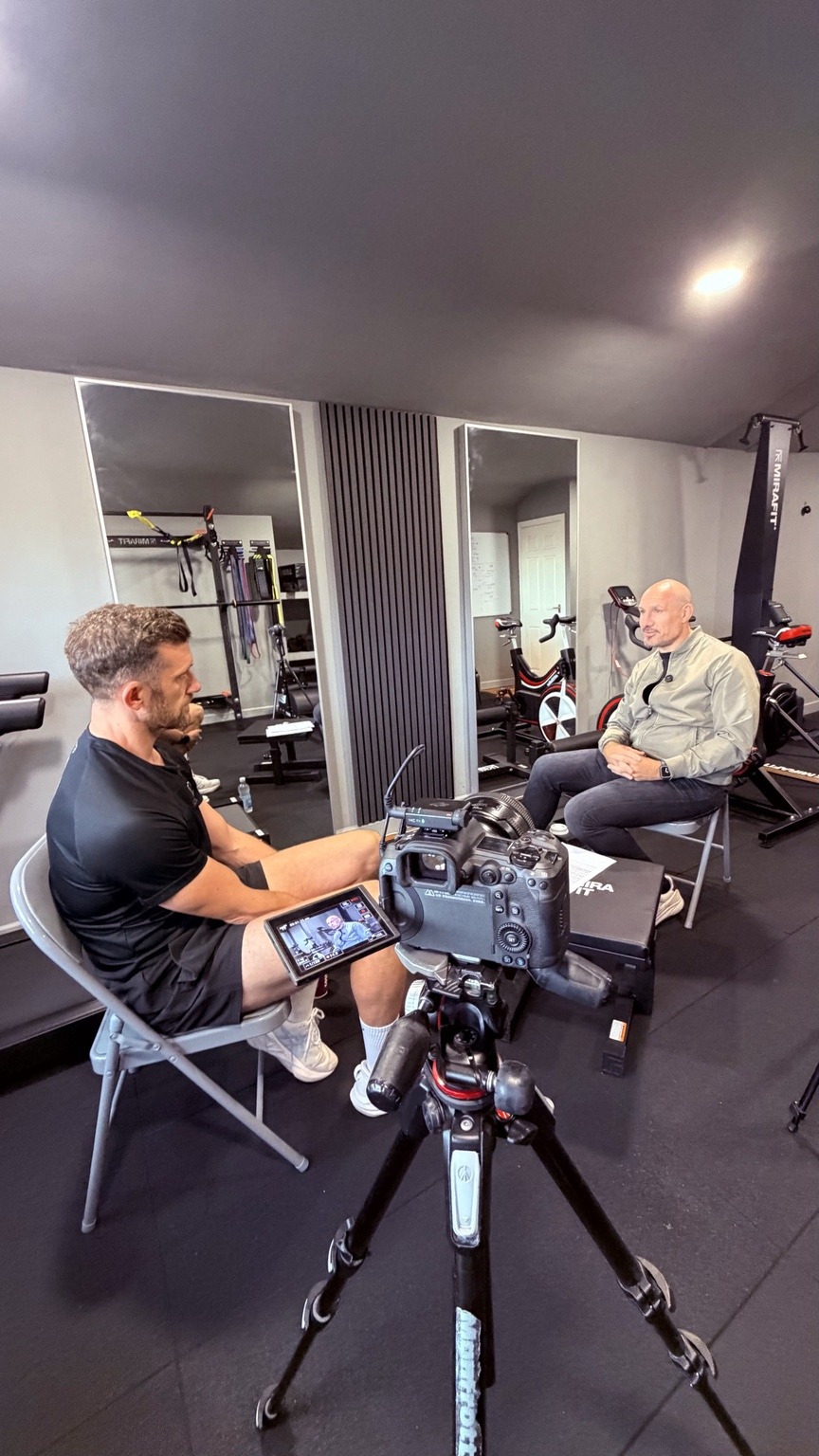

What research tells us about business owner isolation, work-life balance and finding support that fits.
By Andy Hosgood | Unlock with Coaching
Founder loneliness can be hard to name when your day is full of people.
Your team needs a decision. A client wants reassurance. At home, someone asks how work is going.
“Fine,” you say.
Meanwhile, you are wondering about cash flow, a difficult conversation or a choice you cannot yet explain.
You have people around you. However, you may still feel that you are carrying the business alone.
Founder loneliness is the feeling that the connection or understanding you need is missing while you run your business. It can happen even when you have a team, clients and a busy social life.
Having responsibility does not remove your need for support. In fact, it makes that support worth thinking about.
How common is founder loneliness?
A YouGov survey published by Start Up Loans in December 2025 gives us a useful UK starting point.[1]
It reported that:
- 44% of smaller business owners had felt lonely or isolated while running their business.
- 56% of microbusiness owners had felt isolated. The report defines microbusinesses as having fewer than ten employees.
- 55% wished they had someone they could turn to for support.
- 51% struggled to maintain a healthy work-life balance.
These are survey findings, not a clinical diagnosis or proof of cause and effect. The 44% figure also combines loneliness and isolation.
Nevertheless, the findings put words to an experience that can remain hidden.
You can value the freedom of ownership and still need someone to talk to. Both can be true.
Why you can feel lonely in a busy business
Working alone and feeling lonely are different things.
You might enjoy a quiet day on your own. Conversely, you might feel unseen in a room full of people.
For a business owner, the gap may sit between the conversations you have and the conversations you need.
Perhaps everyone knows the plan, but nobody knows how uncertain you feel about it. Or you have plenty of contacts, yet no trusted person to call when something goes wrong.
A 2026 review by Umdasch and Berger brought together 163 papers from entrepreneurship, leadership and workplace research.[2] It describes founder loneliness as involving personal, social and work factors.
That helps us ask a better question than “Do I need to get out more?”
Which part of running the business do I feel unable to share?
You might need practical advice. You might need a thoughtful challenge. Sometimes, you simply need someone to listen without asking you to have the answer ready.
What the research says about the cost of loneliness
Loneliness deserves attention in its own right. There is also evidence linking it with how people experience work.
A review and meta-analysis by Bryan and colleagues found links between workplace loneliness and burnout.[3] It also found that better relationships between workers and managers were associated with less loneliness.
Most of this evidence concerns workers in general, rather than founders. It shows links, not proof that loneliness causes burnout.
Research focused on entrepreneurs adds another perspective.
Zhu and colleagues studied entrepreneurs in the UK and Indonesia.[4] Their survey findings linked loneliness with lower passion for the business and stronger intentions to leave it.
An intention to leave is not an actual exit. Nor does the study show that a peer group would prevent someone from leaving.
However, it suggests that feeling alone can be relevant to how an owner relates to their business.
Before deciding “I have lost my drive”, it may help to ask:
Am I tired of the business, or tired of carrying it this way?
That is a coaching question, rather than a conclusion drawn by the study. It opens a useful conversation.
Founder loneliness and work-life balance
When work takes most of your time, there may be less room for the relationships that help you feel connected.
Yet hours are only part of the picture. You can finish work and still spend the evening thinking about it.
Wach and colleagues followed 55 entrepreneurs in a diary study.[5] Higher demands were linked with more evening work thoughts, less ability to switch off and poorer wellbeing the next morning.
This study examined recovery, not loneliness. Still, it helps explain why time away from the desk may not feel like a break.
For example, you might be at dinner but mentally preparing tomorrow’s meeting. As a result, you have time with someone without feeling fully present.
A useful review of work-life balance therefore includes two questions:
“What time do I protect outside work?”
“And what helps me return my attention to it?”
You do not need a perfect split between work and life. However, the people and activities you value need more than whatever time happens to remain.
How to acknowledge business owner isolation
Naming the feeling can be uncomfortable, especially if you are used to reassuring others.
Start with a specific observation.
“I have nobody I can talk to about this decision.”
“I keep saying I am fine because I do not want to worry anyone.”
“I see lots of people, but I miss conversations where I can be honest.”
These are reflection prompts, not a test for loneliness.
Also, notice what you need from the conversation. Advice, listening and emotional support are different needs.
If you can name the need, you can ask more clearly:
“Could I talk this through with you? I would value your questions before we look for answers.”
That gives the other person a better chance of helping.
Six ways to find support for business owners
The following suggestions are practical applications of the research and a coaching approach. They are not a tested treatment programme.
Choose what fits your situation. You do not need six more tasks.
1. Match the support to the problem
One person does not have to meet every need.
An accountant may help you understand the numbers. A trusted peer may understand the pressure of ownership. A friend may help you reconnect with life outside work.
Similarly, a coach can offer space to explore choices and patterns.
Ask yourself: “What am I carrying, and who could help with this part?”
Then make one clear request. You might be surprised by how much easier it is to help when the need is specific.
2. Choose connection over collecting contacts
A larger network does not necessarily give you a place to speak openly.
Instead, look for a person or group where you can listen, contribute and return over time.
Useful questions include:
- Can we discuss a challenge without turning it into a sales pitch?
- Do people listen before offering advice?
- Can I disagree or admit uncertainty?
- Are the boundaries around privacy clear?
Also, protect client and employee confidentiality. You can discuss a leadership challenge without sharing details that identify someone.
A smaller, trusted conversation may serve you better than another crowded event.
3. Make peer support a regular part of the diary
If support depends on a spare afternoon, it may never happen.
Therefore, consider a regular conversation with another owner or a small peer group. Keep the arrangement simple enough to sustain.
For example, you could each bring one challenge and one question. Afterwards, agree what you want to take away.
This is the thinking behind Unlock Circle: making room for reflection, connection and thoughtful challenge among people carrying responsibility.
It is a support option to explore, not a proven solution to founder loneliness. The quality of the conversation matters.
4. Protect a relationship outside the business
Business peers understand some pressures. However, you also need room to be more than a business owner.
Choose one relationship or activity that matters to you.
Then protect a realistic amount of time for it. Perhaps that means a weekly walk, a shared meal or returning to a hobby.
Before you start, write down the work issue you need to revisit tomorrow. This is a simple experiment to help you leave it somewhere other than your head.
Also, ask the people close to you what being present would look like to them. Their answer may differ from yours.
5. Review what keeps coming back to you
Sometimes the need for support sits alongside a business that asks too much of its owner.
Which decisions require your judgement? Which reach you because responsibility or authority is unclear?
For example, one colleague might be able to own a routine decision once the limits are clear.
Reducing that pressure is a management step, not a direct treatment for loneliness. Nevertheless, it may create time for support and life outside work.
Connection and business structure can both deserve attention.
6. Consider a confidential thinking space
You may need a conversation outside your team or personal circle.
Coaching can help you explore what you need, challenge assumptions and choose a manageable action.
A 2023 meta-analysis of 20 randomised trials found support for executive coaching, particularly for changes in behaviour.[6]
However, it did not establish that coaching reduces founder loneliness. That specific claim would go beyond the evidence.
When choosing a coach, discuss privacy, expectations and the purpose of the work. You should know what support the relationship can offer.
If loneliness persists or affects your daily life, consider speaking with your GP or a qualified mental health professional too.
A small step you can take this week
Set aside ten minutes and finish these sentences:
The part I find hardest to carry alone is…
The kind of support I need is…
One person I could speak to is…
A time I could make that happen is…
Then act on one answer.
For example:
“I need to talk through a staffing decision. I will ask a trusted peer for half an hour on Thursday.”
Afterwards, notice what helped. Did you feel understood? Did your thinking become clearer? Was there something else you needed?
This is a personal reflection exercise, not a scored assessment.
The aim is to learn what useful support feels like for you.
Who supports the person everyone relies on?
Being dependable does not mean doing everything alone.
You can lead a capable team and still need a place to think. You can enjoy your business and still find parts of ownership lonely.
Moreover, asking for support does not hand over your responsibility. It gives you a different way to carry it.
For me, that is an important part of leading with clarity and growing with purpose.
Where in your life can you speak honestly without needing to have the answer ready?
If that question leaves you unsure, it may be time to create that space.
At Unlock with Coaching, I support founders and business owners to reflect, make clearer choices and explore the human side of leading a business.
If you would like to discuss coaching or the idea behind Unlock Circle, get in touch through the website.
Frequently asked questions
What is founder loneliness?
Founder loneliness is the feeling that you lack the connection or understanding you need while running your business. It can happen with or without a team.
How can business owners feel less isolated?
Start by identifying what you need: advice, listening, challenge or connection outside work. Then choose a trusted person or suitable group and make time for a conversation.
Can peer support help founders?
Peer support can offer shared experience and a place to talk. However, the sources reviewed here do not establish that a particular founder peer group will reduce loneliness.
How does work-life balance relate to founder loneliness?
Heavy work demands can leave less room for relationships and make switching off harder. Both deserve attention, although this does not prove a direct causal link between work-life imbalance and loneliness.
Research and sources
- Start Up Loans (5 December 2025). Almost half of UK smaller business leaders feel isolated running their business.YouGov survey commissioned by The Start Up Loans Company, part of the British Business Bank. Survey findings; not a peer-reviewed journal study. https://www.startuploans.co.uk/media-centre/almost-half-uk-smaller-business-leaders-feel-isolated-running-their-business
- Umdasch, M. C., & Berger, E. S. C. (2026; first published online 2025). Understanding entrepreneurs’ loneliness: An integrative review of loneliness in management research. Journal of Small Business Management, 64(3), 1256–1295. https://doi.org/10.1080/00472778.2025.2544839
- Bryan, B. T., Andrews, G., Thompson, K. N., Qualter, P., Matthews, T., & Arseneault, L. (2023). Loneliness in the workplace: a mixed-method systematic review and meta-analysis. Occupational Medicine, 73(9), 557–567. https://doi.org/10.1093/occmed/kqad138
- Zhu, F., Yu, W., Fan, S. X., & Jonathan, J. G. (2023). Should I stay or should I go? The impact of entrepreneurs’ loneliness on business exit intentions through entrepreneurial passion. Journal of Business Venturing Insights, 19, e00368. https://doi.org/10.1016/j.jbvi.2022.e00368
- Wach, D., Stephan, U., Weinberger, E., & Wegge, J. (2021). Entrepreneurs’ stressors and well-being: A recovery perspective and diary study. Journal of Business Venturing, 36(5), 106016. https://doi.org/10.1016/j.jbusvent.2020.106016
- Nicolau, A., Candel, O. S., Constantin, T., & Kleingeld, A. (2023). The effects of executive coaching on behaviors, attitudes, and personal characteristics: a meta-analysis of randomized control trial studies. Frontiers in Psychology, 14, 1089797. https://doi.org/10.3389/fpsyg.2023.1089797