Clinton Lewis on mindset, habits and taking action
Unlocking Human Potential with Andy Hosgood
“The first thing you need to do is take action. Otherwise, you become the person who says, ‘I could do that,’ rather than the person who is doing it.”
For many business owners, the business becomes the priority, the pressure and, eventually, the excuse. Health can wait. Rest can wait. Family time gets squeezed. Personal development is pushed to the edge of the diary while the founder keeps carrying more.
The uncomfortable truth is that a business can only compensate for an owner’s habits for so long. When the person at the centre loses structure, clarity or self-belief, that strain begins to show in decisions, relationships, energy and performance.
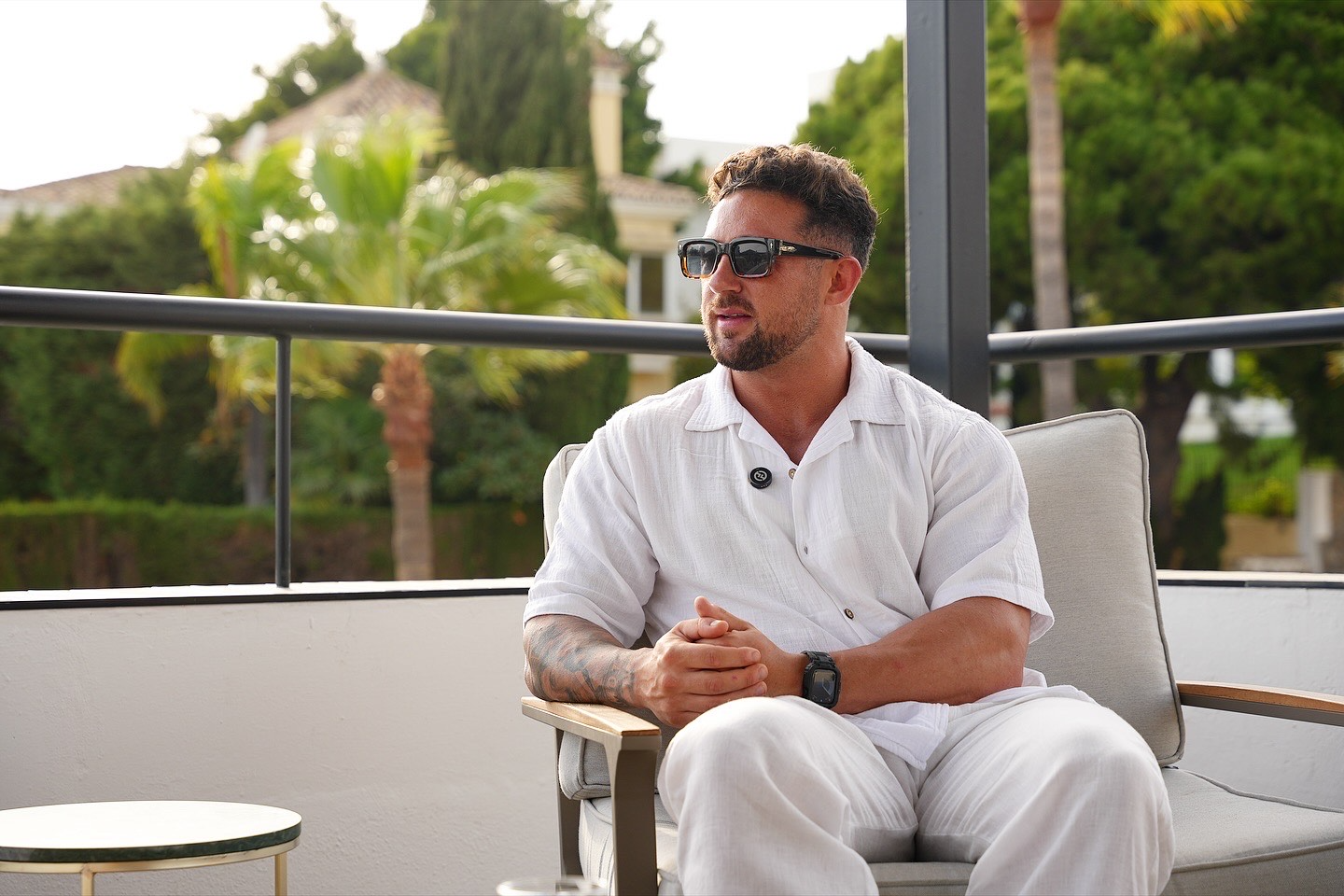
In this episode of Unlocking Human Potential, I speak with Clinton Lewis, founder of Active Physiques, about the relationship between mindset, physical wellbeing, discipline and business growth. Clinton’s story moves from an unhappy job and financial struggle to building a fast-growing coaching business. More importantly, it reveals the setbacks, contradictions and difficult choices behind that progress.
This is not a polished success story in which every decision was right. It is a candid conversation about limiting beliefs, self-sabotage, accountability and the repeated actions that shape who we become.
Confidence usually follows action
Clinton once watched live speakers and wondered whether he knew enough to lead an event of his own. Fear of judgement and the possibility of failure kept the idea safely in the future. Then he attended an event and saw people operating at a level that felt within reach. The distance between “them” and “me” suddenly looked smaller.
That experience did not remove fear. It gave him enough evidence to act. His first event attracted around 27 people. A later event grew to more than 100. The confidence came through doing the work, learning from it and building momentum.
This matters because leaders often wait for certainty before making a move. They tell themselves they will launch the offer, hold the difficult conversation, improve their health or step onto the stage once they feel ready. Readiness is often the result of action, not its prerequisite.
Clinton captures the distinction bluntly. Without action, you remain the person who says, “I could do that.” Action allows you to become the person who is doing it.
The lesson hidden inside the low point
Before Active Physiques, Clinton worked in a job that left him feeling trapped. A season in Ibiza offered freedom, but also brought financial hardship and a moment when he could not afford a basic sandwich. Later, after building a successful business, he experienced another low point. Cash became tight, the business slowed and he needed help to cover staff costs.
His reflection is not that struggle is automatically useful. Struggle can simply hurt. Its value depends on whether we are willing to examine what happened and change what happens next.
During the business downturn, Clinton noticed that his inputs reflected his mood. Even while training, he had drifted towards content that reinforced agitation and negativity. He changed what he consumed, returned to personal development and paid closer attention to the link between his state of mind and his choices.
That is a useful leadership question: when pressure rises, what do you repeatedly consume, avoid or reach for? The answer may tell you more about your performance than another strategy document ever will.
Self-awareness without honesty changes very little
One of the strongest themes in the conversation is the need to own the gap between what we say and what we do. Clinton speaks openly about periods when celebration, alcohol and impulsive spending did not match the standards he wanted to model for his clients and team.
He had tried to change before, but kept leaving himself a loophole. He would stop drinking, except on holiday. Once the exception was used, the wider commitment became easier to abandon. His breakthrough was not a new productivity technique. It was closing the gap between his stated identity and his repeated behaviour.
Leaders lose trust in themselves in the same way they lose trust in others: one broken promise at a time. The reverse is also true. Each small commitment kept becomes evidence that you can rely on yourself.
This is where self-compassion needs backbone. Compassion is not pretending that an unhelpful pattern is harmless. It is being honest enough to see the pattern without turning that honesty into shame, then choosing a better response.
Why structure matters for busy business owners
Clinton believes that one of the biggest challenges facing successful business owners is structure. The business is placed first, while the person responsible for leading it is placed last.
There is a seductive story behind this. Sacrificing yourself can look like commitment. Working late can look like ambition. Cancelling training, meals, recovery or family time can look necessary. Yet if this becomes the default, the founder gradually becomes less able to offer the judgement, patience and presence the business requires.
Structure is not about creating a perfect routine or copying someone else’s morning ritual. It is about deciding what protects your capacity to lead, then giving those behaviours a reliable place in your week.
- Movement or training that supports energy and consistency.
- Food choices that help you feel and perform well.
- Time away from noise so you can think clearly.
- Boundaries that stop every business demand becoming an emergency.
- People who will challenge you when your behaviour drifts from your commitments.
Clinton uses walking in nature, training, attention to food and cold-water immersion as personal reset practices. These are his methods, not a universal prescription. The broader principle is more valuable: know what helps you regulate, think and perform, then stop treating it as optional.
Motivation starts the process. Repetition changes the pattern
A live event, podcast or book can create a surge of motivation. The problem is that motivation fades while the old environment and habits remain. Insight feels powerful in the moment, but it does not become transformation until it changes behaviour.
Clinton uses written goals, repeated statements and visual reminders to direct his attention. Some listeners will connect with that language and others will prefer a more practical framing. Either way, the mechanism is familiar: what we rehearse becomes easier to notice, believe and act upon.
The important test is not whether a practice sounds inspiring. It is whether it helps you make a better choice when you are tired, doubtful or under pressure.
A simple exercise to expose what is holding you back
During his live event, Clinton used a three-part reflection exercise. Take a sheet of paper and create three columns:
- What do I want? Write the goal, change or ambition as clearly as possible.
- What is holding me back? Name the belief, fear, constraint or story.
- How do I self-sabotage? Identify the repeated behaviour that keeps the barrier in place.
The value of the exercise is its simplicity. It turns a vague sense of frustration into something visible. It also separates a genuine external constraint from a familiar internal pattern.
A second version can help when you are avoiding a specific decision. Divide the page in two. On one side, write the benefits of taking the action. On the other, write the benefits and costs of not taking it. Avoidance often survives because its short-term benefit, usually comfort or protection from judgement, has never been made explicit.
Accountability should feel supportive and challenging
Clinton’s coaching stories underline another principle that sits closely with the Unlock approach: people are more likely to be honest when trust has been built. Real accountability does not begin with judgement. It begins with enough psychological safety for someone to tell the truth.
But safety is not the same as endless reassurance. The people who care about our growth are sometimes the people willing to say, “You told me this mattered. You said you would do it. What happened?”
For leaders, this balance is critical. Teams need an environment where mistakes, concerns and uncertainty can be voiced. They also need clear standards and conversations that address behaviour before frustration turns into resentment. Challenge without care becomes threat. Care without challenge becomes comfortable stagnation.
Your team notices what you model
Clinton traces part of his commitment to training back to watching his father exercise throughout his childhood. Andy reflects on the same principle as a parent: if we tell our children to look after themselves while continually abandoning our own commitments, they are more likely to learn from the behaviour than the instruction.
The same is true in leadership. A leader cannot credibly promote boundaries while sending midnight messages. They cannot ask for honest feedback while becoming defensive when it arrives. They cannot build accountability if their own commitments are negotiable.
Culture is not only what appears in the values statement. It is what the leader repeatedly permits, rewards and demonstrates.
New levels bring new challenges
One phrase from Clinton’s mentor captures the reality of growth: “New levels, new devils.” Progress does not produce a life without doubt, pressure or difficult decisions. It creates a new set of them.
That can feel disappointing if success has been imagined as a final destination. It becomes energising when growth is understood as an ongoing practice. You do not need to become flawless. You need to become more aware, more deliberate and more capable of responding when the next challenge appears.
As I often say in my own coaching work, we are all a constant work in progress. The aim is not to wait until you are a finished product. It is to be honest about who you are today while taking responsibility for who you are becoming.
Turn this insight into action
Set aside 20 minutes today. No new app, elaborate plan or colour-coded dashboard is required. A sheet of paper will do.
- Choose one result you genuinely want in your health, leadership, business or family life.
- Write down what you believe is stopping you.
- Identify the behaviour you repeat when discomfort, fear or pressure appears.
- Compare the real benefits and costs of acting with the real benefits and costs of avoiding action.
- Choose one commitment small enough to repeat and important enough to matter.
- Tell one trusted person what you will do and when you will do it.
- Take the first visible step within the next 24 hours.
You do not need another week of thinking before you begin. You need an honest next step and enough structure to repeat it.
Listen to the full conversation
In the full episode of Unlocking Human Potential, Clinton Lewis and I explore the beliefs that shape behaviour, the habits behind sustainable performance, the personal reality of building a business and the responsibility leaders have to look after the person behind the role.
Spotify :