
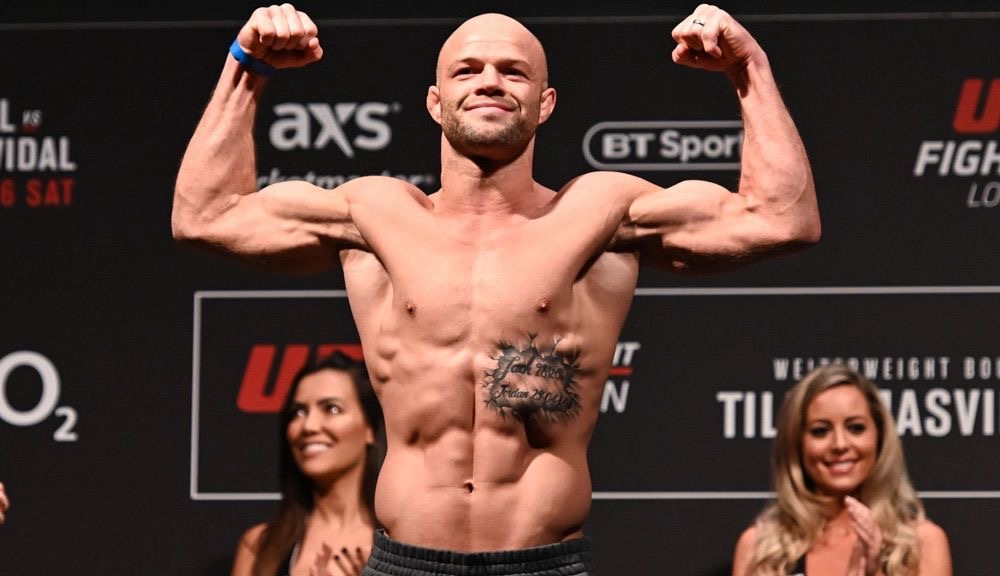
Mike Grundy on discipline, coachability and leading people
Unlocking Human Potential with Andy Hosgood
“Does this decision get me closer to where I need to be?”
Leadership lessons from elite sport are often reduced to familiar phrases about resilience, sacrifice and hard work. Mike Grundy’s story offers something more useful. It shows how high performance is built through clear choices, honest relationships and the willingness to keep learning long after you have earned the right to be confident.
Mike is a Wigan-born former UFC athlete, Commonwealth Games bronze medallist, coach and founder of Grundy Fight Academy. He started wrestling at six, became a parent at 17 and left a bricklaying apprenticeship to pursue sport full time on a modest income. His career took him from British wrestling mats to the UFC, but the most valuable ideas in this conversation are not reserved for professional fighters.
In this episode of Unlocking Human Potential, Mike speaks with Andy Hosgood about discipline, coachability, trust and the responsibility that comes with leading other people. The result is a practical discussion for business owners, coaches and leaders who want to perform at a high level without losing sight of the human being in front of them.
A clear goal changes the meaning of sacrifice
Mike knew from childhood that he wanted to compete at the highest level. That clarity mattered when the practical case for continuing looked weak. He left a secure apprenticeship to become a full-time wrestler while earning around £400 a month and helping to support a young family.
One memory from that period is especially stark. With only £5 in his pocket, he needed to buy infant formula that cost roughly twice as much. It would be easy to turn that moment into a romantic story about struggle. Mike does not pretend the situation was comfortable. The point is that his decision had a cost, and he had chosen a goal important enough to make the cost meaningful.
For leaders, the lesson is not to abandon stability or ignore responsibility. It is to stop describing an ambition as a priority when your decisions consistently protect something else. Commitment becomes credible when you understand the trade-offs, build the support you need and accept that a meaningful goal will ask something of you.
Aim beyond getting through the door
Mike achieved what many athletes never do. He reached the UFC. Looking back, however, he can see that his original goal also created a ceiling. He had focused on getting into the organisation, not on becoming UFC champion.
That reflection now shapes the advice he gives his son Jack. Participation is not the destination. If the real ambition is a world title, name it. The larger goal changes the training, standards and decisions required along the way.
The same problem appears in business. A founder aims to launch rather than build a sustainable company. A leader aims to win the promotion rather than become capable of leading at the next level. A team aims to complete a project rather than create an outcome that matters. Entry goals can generate motion, but they may also define an artificial finish line.
Ask yourself: what would success look like after I get through the door?
Discipline is a decision repeated
The most memorable question in the episode is also the simplest: “Does this decision get me closer to where I need to be?”
Mike uses this as a daily filter. Training when motivation is low, choosing the right environment and protecting the standards of the team all become easier to assess when they are connected to a clear destination. The answer will not make every decision comfortable, but it removes some of the negotiation.
This is a more practical definition of discipline than constant intensity. Discipline is not a personality reserved for elite athletes. It is the repeated act of choosing in line with what you say matters. For a leader, that might mean preparing properly for a difficult conversation, asking for help before a problem escalates or protecting thinking time rather than surrendering the day to noise.
Coachability is an elite skill
Experience can create confidence, but it can also make people harder to teach. Mike takes the opposite approach. He remains curious about what he can learn from different coaches, training partners and practitioners, including people with less status or a lower rank.
That openness is not false modesty. It is a performance advantage. The moment an athlete decides there is nothing left to learn, progress begins to slow. The same is true for an experienced founder or senior leader who only accepts insight from people with a more impressive title.
Coachability combines confidence with humility. You need enough self-belief to act on what you know and enough curiosity to notice what you do not. In uncertain environments, that combination is more useful than pretending expertise has made you complete.
Build the team your ambition requires
Before multidisciplinary performance support became common in mixed martial arts, Mike assembled people around him who could strengthen different parts of his preparation. Andy was part of that wider team as a physiotherapist. Technical coaching, physical preparation, rehabilitation and honest feedback each served a different need.
High performers are often celebrated as individuals, but individual success usually rests on collective expertise. Mike’s story challenges the idea that asking for help signals weakness. At the highest level, knowing what you need and finding the right person to provide it is a form of professionalism.
Leaders can apply the same principle by auditing the ambition against the support around it. Where is specialist knowledge missing? Who can challenge your assumptions? Who helps you recover perspective when pressure narrows your thinking? A goal can be personal, but it rarely has to be pursued alone.
Good coaching begins with time and care
When Mike describes the coaches who made the greatest difference, technical knowledge is only part of the answer. The strongest coaches were reliable. They gave time, paid attention and cared about the person beyond the training session.
Presence matters too. A coach cannot expect energy from an athlete while communicating disinterest through every word and gesture. The same applies to leadership. People notice whether you are genuinely with them, whether you remember what matters to them and whether your behaviour matches the standards you ask them to meet.
Care is not softness. It creates the relationship that makes honest challenge possible. When people believe a coach or leader is invested in them, difficult feedback is more likely to be heard as useful rather than threatening.
Do not lead every person in the same way
One of Mike’s clearest lessons from coaching is that people need different things. One athlete may respond to a direct challenge. Another may need reassurance, context or an arm around the shoulder before they can hear the same message.
This is not about lowering standards. It is about changing the route by which a person can reach them. Treating everyone identically can look fair while producing poor results, because it ignores differences in confidence, experience, motivation and what is happening outside the room.
Mike has developed this judgement through coaching professionals, running a business and working with children. The common skill is attention. Effective man-management begins by noticing the individual rather than reaching automatically for your preferred leadership style.
Turn poor leadership into a better standard
Mike is candid about experiences of being handled poorly as an athlete. His response has been to use those experiences as information. He cannot change how he was treated, but he can refuse to recreate the same conditions for the people he now coaches.
That choice appears in his commitment to transparency. He wants athletes to understand opportunities, matchups and decisions rather than feel that important information is being controlled around them. The principle extends beyond sport. When leaders hoard context or use ambiguity to preserve power, trust erodes quickly.
A difficult former manager or coach can become a permanent excuse, or a detailed lesson in what not to repeat. Reflection turns a bad experience into a leadership standard: this is how it felt, this is what it cost, and this is how I will behave differently.
Trust is built before pressure arrives
In combat sport, trust is highly visible. An athlete enters the contest, but the preparation, instructions and emotional support of the team travel with them. That trust cannot be manufactured in the final minutes before competition. It is built through consistency, honesty and thousands of smaller interactions.
Teams at work are no different. People are more willing to take a difficult step, admit uncertainty or accept challenge when they believe the leader is competent, truthful and on their side. Psychological safety is not the absence of pressure. It is confidence that you can be honest while working through it.
Trust also creates discretionary effort. People will often give more when they feel valued and understand the purpose of what is being asked. Without that foundation, even a technically correct instruction may produce compliance rather than commitment.
Leadership without ego lets people outgrow you
A particularly powerful moment in the conversation concerns Mike’s decision to send Jack to train in Brazil. As a father and coach, he could have kept his son close and protected his own position. Instead, he recognised that Jack needed unfamiliar training partners, greater independence and an environment that would stretch him in new ways.
Strong leaders do not need to remain the most important person in someone else’s development. They can acknowledge the limits of what they provide and help a person find the next experience, teacher or challenge.
This is where leadership separates from ownership. If someone’s growth threatens your identity, you may begin to hold them back. If their growth is the purpose, helping them outgrow you becomes evidence that the relationship has worked.
Discipline becomes culture
At Grundy Fight Academy, the standards Mike teaches children are not limited to striking or grappling. Punctuality, focus, respect and the ability to follow through become habits that can travel into school, work and family life.
The same pattern shapes organisational culture. Values do not become real because they appear on a wall. They become real when people see which behaviours are repeated, corrected and rewarded. A standard applied only when convenient is not a standard. It is a preference.
For leaders, culture is the accumulation of ordinary moments: whether meetings start on time, whether promises are kept, whether poor behaviour is addressed and whether curiosity is welcomed from every level of the organisation.
A practical leadership reset
Mike’s experience can be translated into a short reflection for leaders, coaches and business owners. Set aside 20 minutes and work through these seven questions:
- Define the goal beyond entry. What do you want after the launch, promotion, qualification or first milestone?
- Name why it matters. What makes this goal worth the trade-offs it will require?
- Identify the support. Which skills, perspectives or people are missing from your current team?
- Use the daily filter. Does today’s decision move you closer to where you need to be?
- Choose what to learn. Where has experience made you confident, and where might it have made you closed?
- Lead the individual. What does each person need from you to meet a clear and consistent standard?
- Act within 24 hours. What is one concrete choice that will turn intention into evidence?
The exercise is deliberately simple. Its value comes from honest answers and a visible next action, not from producing a perfect plan.
The real meaning of an elite mindset
Mike Grundy’s journey includes the markers people associate with high performance: medals, professional competition, physical courage and years of demanding training. Yet the deeper leadership lessons from elite sport are quieter.
Know what you are working towards. Stay open enough to learn from anyone. Build a team that strengthens what you cannot do alone. Treat people according to what helps them grow. Be honest before pressure forces the truth. Let the people you lead become bigger than your role in their story.
Above all, return to the question that has guided Mike through wrestling, the UFC, coaching and business: does this decision get me closer to where I need to be?
Listen to the full conversation with Mike Grundy on Unlocking Human Potential for a candid discussion about discipline, trust, coaching, family and the choices behind a high-performance life.
Listen and connect
- Apple: https://podcasts.apple.com/gb/podcast/unlocking-human-potential-with-andy-hosgood/id1870292360?i=1000752590344
- Spotify: https://open.spotify.com/episode/0w65h7NhAuwcy27XM8orO6?si=jtpDGveYQQqxxDNmldR_sQ
- You Tube: https://youtu.be/uXwvw1egn2Y?si=m6qEjjOrtttOTa7G
- Follow Mike Grundy: https://www.instagram.com/mike_grundy/
- Follow Grundy Fight Academy: https://www.instagram.com/grundy_fight_academy/