
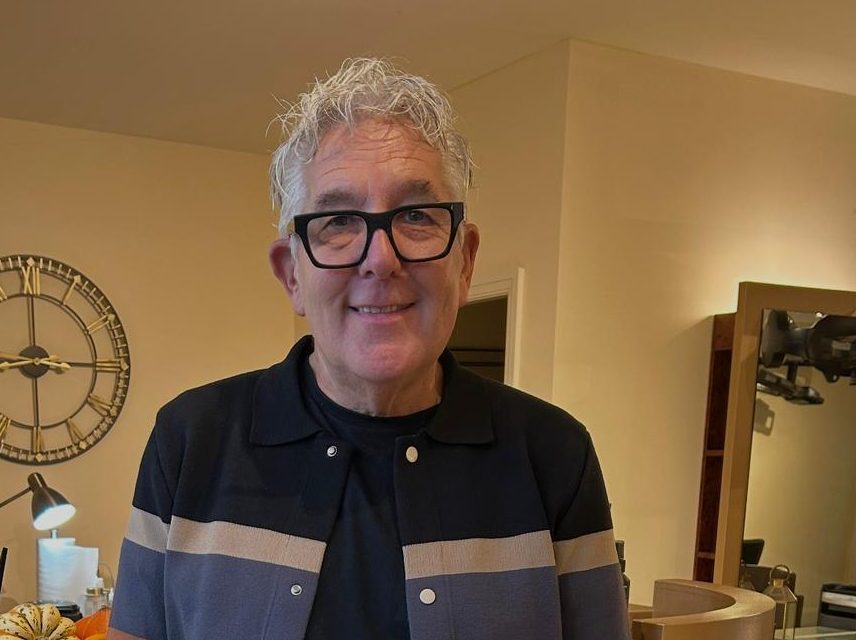
Leadership, customer experience and the lasting lessons of David Thomas
A blog and Substack article by Andy Hosgood, Unlock with Coaching
What do people remember about a business? The product matters. The technical standard matters. Results matter. But when the transaction is over, people often remember something more personal: whether they felt welcomed, understood, valued and safe.
Few people understood this more instinctively than David Thomas. Across more than 55 years in hairdressing and four decades building David Thomas Hairdressing, he became an award-winning salon founder, educator and mentor. He developed stylists, built academies, taught internationally and stood on stages in front of thousands. Yet his clearest leadership lesson was beautifully simple. People are the real craft.
David sadly died after this episode of the Unlocking Human Potential podcast was recorded and published. This article honours the warmth, humour and practical wisdom he shared in our conversation. His lessons reach far beyond hairdressing. They speak to every leader and business owner who wants to build a successful organisation without losing the human relationships that made the work meaningful in the first place.
A career built through curiosity, practice and saying yes
David’s route into hairdressing was not the result of an elaborate career plan. In 1976, a careers teacher dismissed his ambition to become a lawyer. David visited a technical college, walked through the mechanics and construction departments, then found the hairdressing salon. It was creative, social and full of energy. He decided it was for him.
After an apprenticeship and two years as a stylist, he spent five years working mobile, sometimes visiting clients from early morning until late evening. He opened his first salon in Leyland at 25. Two years later came Chorley, then Preston, and eventually a group of five salons.
Opportunity repeatedly arrived before certainty. When Wella asked him to present, he accepted and learned how to do it. When he was asked to demonstrate a technique he had not mastered, he went back to the salon and practised. That willingness took him from small local events to academies, international education and a stage in Turin in front of 5,000 people.
Confidence did not arrive before the opportunity. It grew because David accepted the opportunity and practised the skills it required.
Skills beat talent when people are given room to learn
David did not place much faith in the idea of natural talent. He believed in skills, practice and the passion that develops when someone begins to enjoy getting better. This is a useful challenge to leaders who make quick judgments about who has potential and who does not.
Talent can sound fixed. Skill is developable. When leaders view capability as something that can grow, they behave differently. They teach, demonstrate, encourage and create opportunities for people to test themselves. They do not lower standards. They make the route towards those standards clearer and safer.
David’s teaching style reflected that belief. He wanted learners to return to their salons with a new idea and more confidence. He guided rather than humiliated, involved members of his own team in education and remained open to learning from the different ways other people interpreted the same technique. Expertise did not close his curiosity. It widened it.
Why psychological safety improves performance
Hairdressing is creative, technical and public. A stylist’s work is visible, personal and open to judgment. That makes the way feedback is delivered especially important. David understood that criticism which diminishes a person may produce anxiety or compliance, but rarely produces confident creativity.
His alternative was encouragement with standards. If a young stylist produced a strong haircut, he said so, sometimes in front of the client. When somebody needed help, he talked with them, demonstrated and allowed them to practise. He used his own behaviour to show how clients and colleagues should be treated.
This is psychological safety in practical form. It is not the absence of expectations or honest feedback. It is the belief that learning will not cost you your dignity. When people can ask, attempt, make adjustments and contribute ideas, standards rise because more intelligence becomes available to the team.
The 80/20 rule for customer experience
One of David’s most memorable ideas is his 80/20 rule. The technical service is the 20 percent. It must be excellent. The other 80 percent is how that expertise is delivered and how the experience makes the customer feel.
The numbers are a principle rather than a scientific formula, but the message is commercially important. Competence is the entry ticket. Loyalty is shaped by the welcome, the conversation, the environment, the anticipation of needs and the feeling that somebody genuinely cares.
At David’s salon, that intention appeared in small details: lavender outside the entrance, good music, warmth, excellent coffee, a front-of-house welcome, clear introductions and carefully presented clean gowns and towels. Team members acknowledged one another’s clients as they passed. None of these details replaced the haircut. Together, they changed the meaning of the visit.
Customer experience is not decoration around the service. It is part of the service customers believe they have bought.
Customer care begins with the team
When David asked salon owners to name the most important part of their business, most answered ‘the client’. His answer was the team. Look after your team, encourage them and invest in their growth, he argued, and they will look after the clients.
That belief was visible in the length of his working relationships. Two stylists had worked with him for 26 years. His front-of-house colleague had been with the business for 11. David cared about seeing team members succeed, whether that meant growing in confidence, taking a good holiday or buying a new car. Their progress gave him genuine pleasure.
Employee retention is often treated as a reward or benefits problem. Those things matter, but people also stay where they feel respected, developed and connected to something worthwhile. A people-first culture is created through consistent daily behaviour, not a values poster or a speech at the annual meeting.
The hidden cost of business growth
David’s story also challenges a seductive business assumption: more locations must mean more success. At one stage he was travelling internationally and running five salons. From the outside, the business looked highly successful. Financially and operationally, it was struggling. Later, one salon made more money than the five had.
The central problem was presence. David could not spend enough time with each manager and team. The care, teaching and visible leadership that made the original environment distinctive became harder to reproduce. The business had scaled its footprint faster than it had scaled the leadership needed to protect the culture.
Asked what he would do differently, David said he would appoint a general manager to oversee the salons while he remained focused on the creative work and relationships where he added most value. That is a valuable lesson for founders. Growth requires more than demand and capital. It requires leadership capacity, clear ownership and a deliberate plan for how the customer and employee experience will survive the founder’s reduced presence.
People-first leadership does not mean lowering standards
David charged higher prices than many competitors because he invested in education, products, people and the quality of the environment. He explained the value rather than apologising for it. Kindness and commercial discipline were not opposites. The human experience was one reason the business could justify a premium position.
This is where people-first leadership is sometimes misunderstood. It does not mean avoiding difficult conversations, tolerating poor work or trying to keep everybody happy. It means giving people the clarity, feedback, resources and belief required to perform well, while remembering that performance is delivered by a human being.
Technical quality without warmth becomes cold. Warmth without competence becomes unreliable. Strong service businesses need both. David’s gift was recognising that the two strengthen one another when leaders model the standard every day.
Five practical leadership lessons from David Thomas
1. Decide what success means before chasing growth
Be honest about what you want from the business and from your life. More locations, revenue or visibility may be useful, but they are not automatically progress. Choose measures that include profitability, quality, time, team health and your own energy.
2. Treat confidence as a skill that can be built
Give people supported opportunities to stretch. Demonstrate, let them practise and recognise specific improvement. Confidence grows through evidence and experience, not through being told to believe in yourself.
3. Audit the full customer journey
Walk through every touchpoint from the first phone call to the final goodbye. Notice where a customer may feel uncertain, ignored or anonymous. Improve one small detail that communicates care and makes the experience easier.
4. Look after the people who look after the customer
Ask what your team needs to grow, do good work and feel proud of it. Make development routine. Celebrate progress in ways that are meaningful to the individual and ensure your behaviour matches the culture you claim to value.
5. Build leadership capacity before adding complexity
Before expanding, decide who will protect standards, coach managers and remain close enough to understand what teams and customers are experiencing. Scale without leadership capacity creates distance, and distance quietly erodes culture.
A legacy measured in people
When illness prevented David from closing his scissor hand, his curiosity turned towards learning to cut women’s hair with clippers. After decades as an expert, he was still prepared to become a beginner. That detail captures much of who he was: creative, practical, optimistic and unwilling to stop learning.
But the most powerful evidence of his leadership was not the number of salons, stages or awards. It was the relationships. It was the colleagues who stayed, the former team members who wrote to him, the clients he had known across generations and the hugs that greeted him when he walked into the salon.
At Unlock with Coaching, we believe leadership starts with self-awareness and becomes real through the conditions we create for other people. David’s life offers a vivid example. Learn your craft. Hold high standards. Be brave enough to grow and wise enough to question what growth is costing. Most of all, care about people in ways they can actually feel.
Techniques can be copied. Processes can be documented. The way you make people feel becomes your culture, your reputation and, eventually, your legacy.
Listen to the episode
Listen to Why People Matter More Than Technique: Leadership Lessons from a Salon Chair on Unlocking Human Potential with Andy Hosgood. The conversation is full of David’s humour, humanity and hard-earned wisdom about leadership, customer experience, team development and building a business that people want to belong to.
Spotify: https://open.spotify.com/episode/73LPsY2pwNW6bgE9vHlsZb?si=c9up0fvmRbSfyjaD_vyWkA
You Tube: https://youtu.be/qJ7TNbOI9QM