
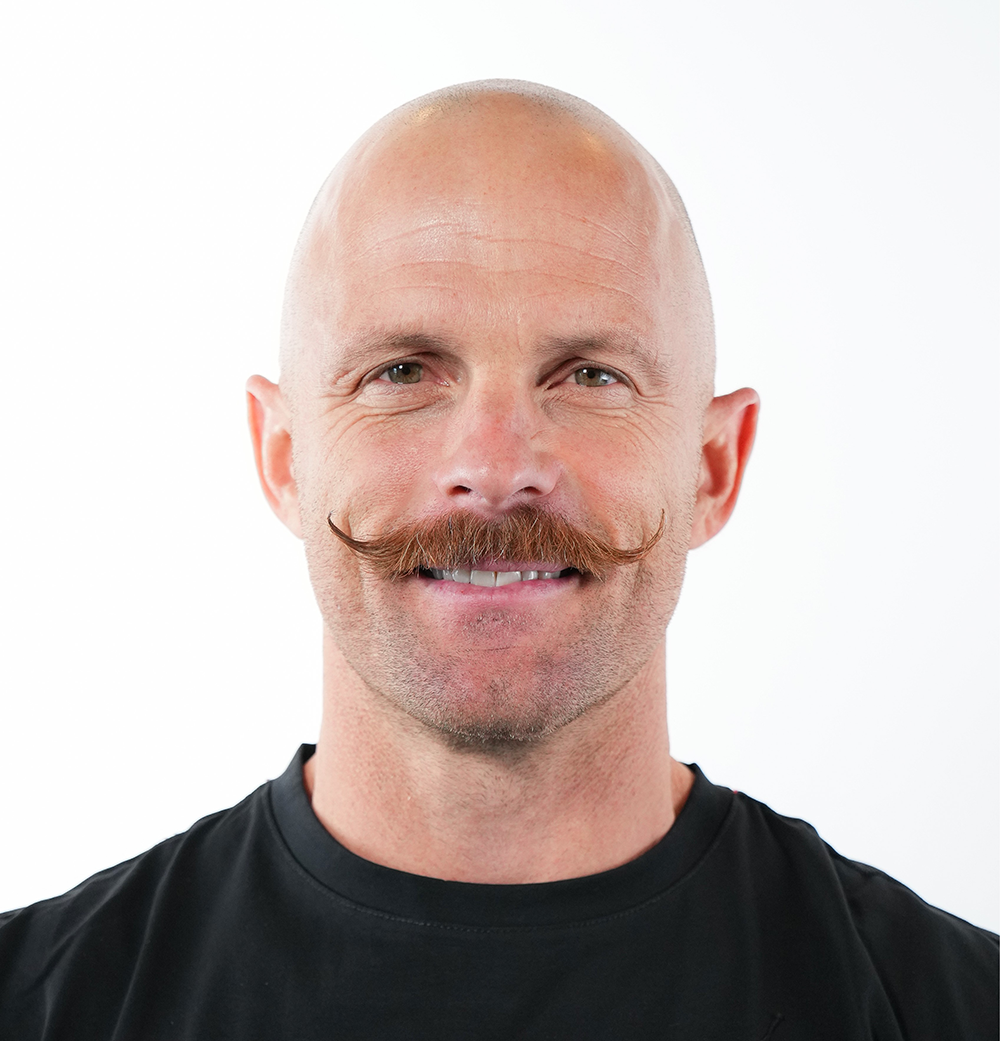
What the UFC can teach us about thriving under pressure
Gavin Pratt on trust, flexible systems and protecting the human behind performance
High performance leadership is often presented as a relentless pursuit of more. More intensity. More discipline. More effort. More output.
But what if sustainable performance depends on something more human?
In this episode of Unlocking Human Potential, I speak with Gavin Pratt, Senior Director of Strength and Conditioning at the UFC Performance Institute in Las Vegas. Gavin has spent more than two decades helping elite athletes prepare for moments when careers can be changed in a matter of minutes.
The setting may be the Octagon, but the lessons reach far beyond combat sport.
This is a conversation about leadership under pressure, the power of a clear personal philosophy, the role of trust in high-performing teams and why the best systems create clarity without removing human judgement.
It is also an honest reminder that performance should never come at the cost of the person expected to deliver it.
High performance leadership starts with a philosophy
When I asked Gavin what optimising yourself meant to him, he did not begin with training routines, productivity tools or technology.
He began with philosophy.
Gavin described himself as “a passionate and energetic leader who strives to optimise performance with an athlete-centred, evidence-based approach.”
That statement acts as more than a positive description. It gives him something to return to when the environment becomes noisy, demanding or uncertain. It also gives him a way to examine his own behaviour.
This matters because a leadership philosophy should not simply describe how you look when everything is going well. It should help you make decisions when pressure exposes your habits, assumptions and blind spots.
For Gavin, passion is both a strength and a potential gap. It gives him energy, care and commitment. It can also create frustration when other people do not respond with the same intensity.
That level of self-awareness is important. Many leaders build an identity around their strengths, then struggle to recognise when those strengths are being overused.
Confidence can become certainty. High standards can become control. Care can become over-responsibility. Passion can become impatience.
The question is not simply, “What am I good at?”
It is also, “When does this strength stop helping me and start getting in the way?”
Your greatest strength may also reveal your development gap
One of the most useful ideas in the conversation is Gavin’s approach to a personal needs analysis.
In elite sport, coaches analyse what an athlete needs to improve. They assess physical qualities, technical demands, risks and priorities. Gavin applies the same thinking to himself and to the people he leads.
A personal philosophy can therefore become a practical leadership development tool.
Ask yourself:
- What qualities do I want people to experience when I lead?
- Which of those qualities feels most natural to me?
- When might that quality become unhelpful?
- What gap do I need to work on over the next six to twelve months?
- What behaviour would show that I am improving?
This moves development away from vague ambition. “I want to be a better leader” sounds positive, but it is difficult to act on. Identifying a specific gap gives you something you can practise, observe and review.
It also asks for honesty. As Gavin points out, working on the gap is harder than returning to the things you already do well. Expertise feels comfortable. Development rarely does.
Values only matter when they shape behaviour
Gavin shared an example of a talented young coach whose energy had suddenly dropped. Rather than assuming a poor attitude or a lack of motivation, Gavin noticed that the behaviour was not normal for him and became curious.
The issue was not a lack of commitment. The coach valued individualised programming, but a period of heavy workload had led him to reuse parts of programmes to save time. His daily work was no longer aligned with his coaching philosophy.
Once he recognised that gap and corrected the programme, his energy returned.
This is a powerful lesson for any leader.
Disengagement is not always a motivation problem. Sometimes it is a sign that the conditions of work are preventing someone from doing work they can believe in.
Good leadership requires enough connection to notice when someone is not themselves. It then requires curiosity before judgement.
Instead of asking, “What is wrong with their attitude?” a better question may be, “What has changed, and what is making it harder for this person to work in a way that feels meaningful?”
That shift can transform a performance conversation from correction into understanding and accountability.
Accountability can be an expression of care
The UFC Performance Institute team uses action plans with three categories:
- A personal work project chosen by the individual.
- A project that contributes to the team.
- A personal goal that may have nothing to do with work.
That third category matters.
It might be training in jiu-jitsu three times a week, developing a new skill or protecting time for life outside work. If somebody repeatedly misses that commitment, the conversation is not automatically about discipline. It may reveal that workload and capacity have become unhealthy.
Gavin reframes accountability as care. He wants people to deliver for the team, but he also wants them to remain physically and mentally well enough to be a happy human.
This challenges the idea that wellbeing is separate from performance.
In reality, leaders cannot keep asking people for energy while ignoring the conditions that restore it. A team member who is permanently depleted may still be present, but presence is not the same as sustainable contribution.
Human-centred leadership is not about lowering standards. It is about creating the conditions in which people can meet high standards without becoming collateral damage.
Human connection is a performance advantage
The UFC Performance Institute has access to data, specialist expertise and sophisticated technology. Yet Gavin is clear that human connection remains fundamental.
“Are you engaging with your staff, and are you engaging with the athletes?” he asks. You are likely to get more from people when they believe you have their back.
Gavin learned this powerfully while working in China before he had a strong grasp of Mandarin. Without shared language, he had to communicate through energy, body language, facial expression and clear instruction.
The experience taught him two things.
First, coaches often talk too much. When words are limited, the message has to become clearer.
Second, people can recognise genuine care before they fully understand your words.
This applies directly to leadership. People constantly read whether a leader is present, interested and consistent. They notice attention, tone and body language. They know when a question is genuine and when somebody is simply waiting to speak.
Your expertise may establish credibility, but the experience you create determines whether people trust you enough to use it.
Trust must go deeper than reputation
The UFC Performance Institute carries considerable authority. An athlete may arrive with an initial belief in the organisation because of its reputation.
But reputation can only open the door. It cannot sustain trust on its own.
Gavin and his colleagues still have to demonstrate that they understand the athlete, the sport and the specific problem in front of them. The athlete needs to see how the work relates to their performance.
One fighter resisted performance testing for two years. Gavin did not force the issue. He built the relationship, listened and waited until there was enough trust to explain why the data could help. When the athlete eventually agreed, the results reflected what he had already been feeling. That evidence then made the training programme more relevant and increased his commitment to it.
The lesson for leaders is simple: people rarely resist change only because they are difficult. They may not yet trust the person, process or purpose behind it.
Data does not remove the need for relationship. A dashboard can show what is happening, but trust helps people speak honestly about why it is happening.
Robust systems should support judgement, not replace it
Combat sport is chaotic. Athletes arrive with different backgrounds, weight classes, injuries, schedules, technical styles and timescales. Some train with the Performance Institute throughout the year. Others arrive shortly before a fight.
In that environment, systems reduce noise.
Gavin describes an MMA hierarchy that helps the team identify the main priority. Does the athlete need to make weight, reduce injury risk or optimise performance? All three matter, but the order can change depending on the athlete and the situation.
This is high performance leadership in practice. Good systems provide a shared way to assess reality and make decisions. They help teams distinguish what is important from what is merely urgent or interesting.
However, Gavin also warns against rigid systems.
The process should guide thinking, not produce a single automatic answer. People need space to interpret information, respond to the individual and use their creativity. If a system removes judgement, it may create compliance while weakening ownership.
The best systems do three things:
- Reduce unnecessary noise.
- Clarify the priority and the outcome.
- Give capable people room to decide how to respond.
That balance is just as relevant in a growing business, a healthcare team or a leadership group as it is in elite sport.
Preparation builds confidence when outcomes cannot be controlled
An athlete can complete an excellent camp, follow the plan and feel fully prepared. Then the cage door closes and anything can happen.
That is a difficult truth about performance. Good preparation improves the odds, but it does not guarantee the result.
Leaders face the same reality. You can prepare for a pitch and still lose the client. You can make a sound decision and still face an unexpected outcome. You can lead a careful change process and still meet resistance.
If success is judged only by the final result, people may abandon a strong process because of one disappointing outcome. They may also claim expertise after a lucky result that hides poor preparation.
Gavin’s approach is to help athletes trust the preparation. Focus on the factors you can influence, rehearse the pressure and make the best decision available with the information you have.
This does not mean results are irrelevant. It means mature performance review separates the quality of the process from the unpredictability of the outcome.
Ask:
- Did we prepare honestly?
- Did we focus on the right priority?
- Did we communicate well across the team?
- Did we adapt when the information changed?
- What can we learn without rewriting the whole story around the result?
That is how confidence becomes grounded rather than fragile.
“Everyone is king”: humility as a leadership principle
When I asked Gavin which principle he wished every leader understood, his answer was immediate: “Everyone is king.”
The idea is that every person knows something you do not. Expertise in one area does not make you the expert in every room.
That mindset keeps leaders curious. It also creates the vulnerability required for other people to contribute.
When a leader has to be the most knowledgeable person in every conversation, the team quickly learns to protect the leader’s ego. Questions disappear. Challenge becomes risky. Useful information stays hidden.
Humility changes that dynamic. It allows a leader to say, “I do not know. What are you seeing?”
That does not reduce authority. It makes authority more credible because people can see that decisions are being shaped by reality rather than status.
The humility Gavin sees in martial arts is instructive. Training provides regular evidence that there is always more to learn. Leaders need a similar practice, something that reminds them they are still a work in progress.
Three practical ways to develop high performance leadership
Gavin ends the episode with three practical ideas that any leader can use.
1. Write your personal leadership maxim
Create one sentence that describes how you want to work and lead. Keep it specific enough to guide decisions.
Then identify the gap hidden within it. Where could one of your strengths become a weakness under pressure?
2. Protect development that belongs to you
Choose something you want to learn or practise that is not simply another work target. Sustainable performance requires an identity and sources of energy beyond your role.
Put it in the diary and treat it as a real commitment.
3. Turn your philosophy into an action plan
Organise your next month around a small number of commitments:
- One project that matters to you professionally.
- One contribution that matters to the team.
- One personal commitment that supports your wellbeing or growth.
- One relationship that deserves more deliberate attention.
Review the plan honestly. If something did not happen, explore why before reaching for blame.
The real lesson from elite performance
The most valuable lesson from this conversation is not that business leaders should behave like fighters.
It is that high performance is deeply human.
It relies on clarity when there is noise, trust when there is uncertainty and preparation when the result cannot be guaranteed. It needs systems, but it also needs judgement. It needs accountability, but accountability should be rooted in care. It requires confidence, but the strongest confidence leaves room for humility.
Above all, high performance leadership asks leaders to protect the human behind the performance.
That is not a softer alternative to results. It is how strong results become sustainable.
Listen to the full conversation with Gavin Pratt on Unlocking Human Potential with Andy Hosgood and consider one question:
What is the leadership gap you already know you need to work on, but keep avoiding because your strengths feel more comfortable?