
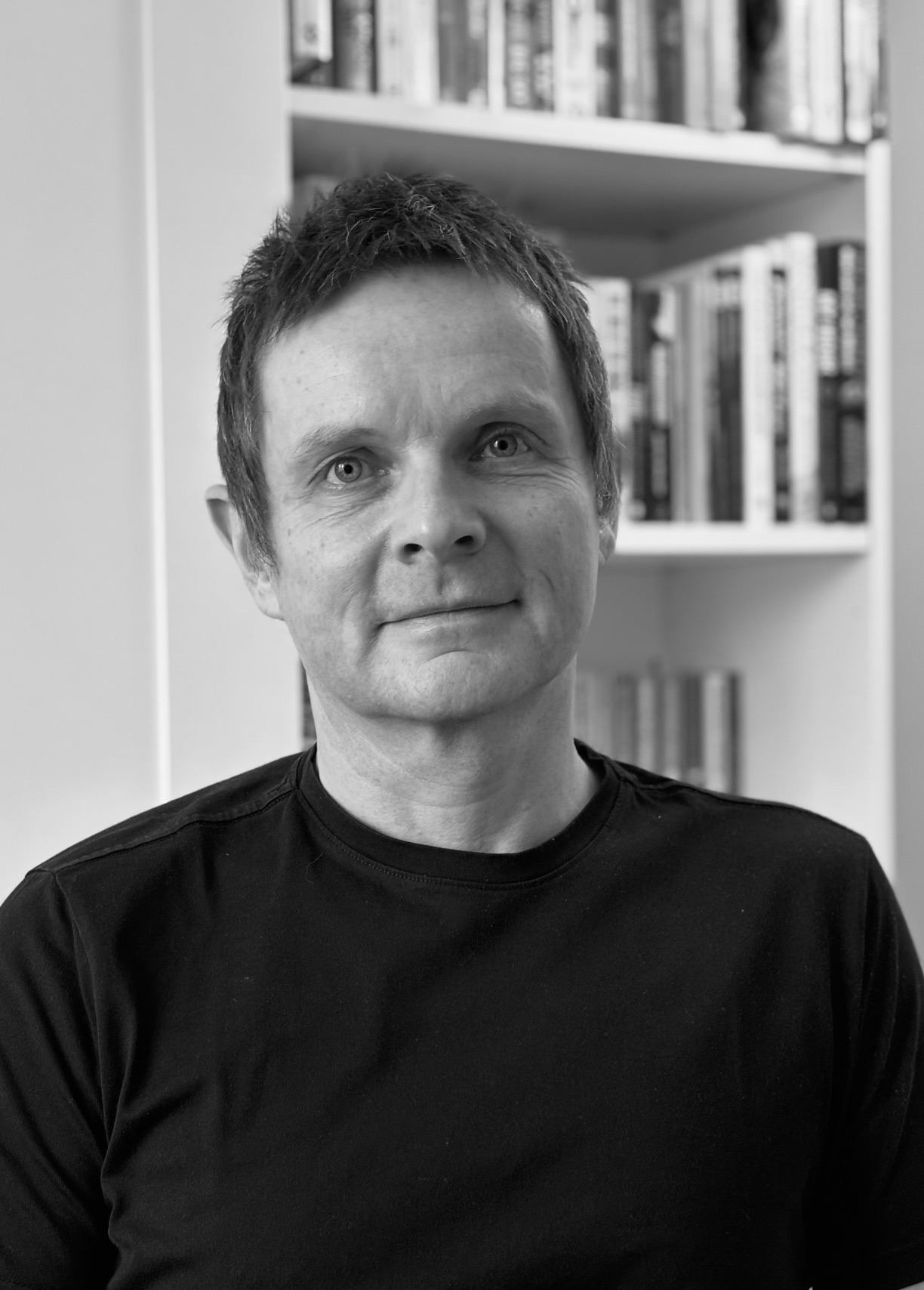
Leadership is a behaviour before it is a position. In this episode of the Unlocking Human Potential podcast, Simon Beesley explains how self-awareness, trust, psychological safety and everyday human connection shape better leaders and healthier workplace cultures.
Ask most people to picture a leader and they will probably imagine someone with a senior title, a large team and a diary packed with important meetings.
But a title does not make someone a leader. It gives them authority. What they do with that authority determines how people experience them.
This is the central idea in my conversation with Simon Beesley, founder of Growth Consulting, on the Unlocking Human Potential podcast:
Leadership is a behaviour, not a job title.
Simon has spent more than three decades leading people and teams across the private sector and the NHS. Today, he helps organisations improve leadership, resilience, team culture and performance. His approach is thoughtful, practical and refreshingly free from leadership theatre.
Our conversation explores what it takes to become more self-aware, why so many middle managers are underprepared, how trust is built through small moments, and why psychological safety cannot be announced at the start of a meeting.
It also asks a question every leader should sit with:
How do people feel after they have experienced your leadership?
What does it mean to say leadership is a behaviour?
Leadership is a behaviour because people respond to what a leader consistently does, not simply to the position they hold. The way you listen, communicate, react under pressure, admit uncertainty and treat people shapes trust far more than your title.
This distinction matters. Organisations often promote people because they are technically excellent, dependable or experienced. The role changes overnight, but the person may receive little help to develop the very different skills involved in leading others.
The Chartered Management Institute found that 82 per cent of people entering management roles had received no formal management or leadership training. It describes them as accidental managers.
That statistic is not an attack on managers. It exposes an organisational failure. People are given responsibility for motivation, communication, conflict, development and performance, then expected to work it out while under pressure from above and below.
Simon is particularly passionate about junior and middle managers because they often sit in the tightest part of the system. Senior leaders expect delivery. Team members expect support. Customers, patients and stakeholders expect results. The manager in the middle is asked to absorb all of it, often without enough preparation or space to think.
If leadership is a behaviour, development cannot stop at policies, frameworks and management theory. It needs to help people examine what they actually do when a conversation becomes uncomfortable.
Why self-awareness is the starting point for better leadership
Before leaders can unlock potential in other people, they need to understand how they affect them.
Simon describes a period in his late forties and early fifties when several experiences changed his understanding of himself. A diagnosis of Asperger’s helped explain patterns in how he worked, planned and related to others. Learning about mind management, identity and visualisation gave him new ways to challenge the belief that his behaviour was fixed.
There is an important difference between self-acceptance and using identity as an excuse.
Saying, “That is just how I am” may feel honest, but it can become a convenient way to avoid growth. Simon’s experience suggests a more useful question:
Who do I want to be, and how close is my behaviour to that person today?
That gap between intention and impact is where leadership development becomes real.
A leader may intend to be clear but be experienced as abrupt. They may believe they are giving people autonomy while the team experiences an absence of support. They may think they are approachable, yet nobody feels able to disagree with them.
Intent matters, but impact is what other people have to work with.
Simon uses tools such as the Johari Window to help managers compare how they see themselves with how colleagues experience them. Feedback can reveal blind spots that status and confidence sometimes conceal.
The point is not to chase approval. It is to understand whether your behaviour creates the conditions you intend to create.
The identity question every leader needs to ask
Simon shares a simple reflective exercise based on the work of Professor Steve Peters. Take a blank page and describe the person you ideally want to be. Consider how that person behaves, communicates and responds under pressure.
Then compare that description with the version of you that appears during an ordinary working week.
This is not about inventing a polished leadership persona. It is about making your values visible in your behaviour.
Language plays a role too. Simon distinguishes between saying, “I am an anxious person” and, “I am a person who experiences anxiety.” The first statement can turn a difficult experience into a fixed identity. The second creates some space between the person and the feeling.
Leaders do something similar when they label themselves or others:
- I am not good with conflict.
- She is resistant to change.
- He is not leadership material.
- That team is always negative.
Labels can become conclusions. Curiosity keeps the conversation open.
When leaders become more conscious of the stories they repeat, they create more choice in how they respond.
Why accidental managers need support, not blame
Many managers learn leadership by copying the people above them. That can be helpful when the example is good. It becomes dangerous when poor behaviour is treated as the price of progression.
Simon and I discuss how people sometimes reproduce the same leadership behaviours they once disliked. A manager who was controlled may become controlling. Someone who was excluded from decisions may later exclude others. A leader who experienced pressure without support may pass that pressure down the line.
This is rarely a conscious strategy. It is often the model of leadership that the organisation has normalised.
Ambitious employees notice which behaviours appear to be rewarded. If the most senior people interrupt, intimidate or ignore challenge, others learn that this is how success works around here.
Breaking that cycle requires senior leaders to model something different and organisations to invest in practical management development. It also requires individual managers to decide which behaviours they are willing to carry forward.
Better managers do not need to know everything. They need enough self-awareness to recognise when they do not know, enough humility to ask, and enough courage to listen to the answer.
Psychological safety cannot be declared
One of the sharpest moments in the episode comes when Simon describes an NHS meeting that began with the announcement, “This is a psychologically safe meeting.”
The words changed nothing.
Psychological safety at work is not a switch a leader can turn on. It is a belief held by team members that they can ask questions, raise concerns, admit mistakes and offer ideas without fear of humiliation or punishment.
Leaders do not get to award themselves psychological safety. Other people decide whether the environment feels safe enough based on what happens when somebody takes an interpersonal risk.
If a colleague challenges a decision, are they heard or labelled difficult? If somebody admits an error, is the first response curiosity or blame? If a junior employee offers an idea, is it explored or quietly ignored because of their grade?
This is especially relevant in hierarchical organisations such as the NHS. Simon points out how professional bands can become shorthand for whose voice carries weight. Yet the people closest to patients, customers and daily operations often see risks and opportunities first.
A team cannot learn from information that people are afraid to share.
Psychological safety grows through repeated evidence that speaking honestly is worthwhile. It is built slowly and can be damaged very quickly.
How leaders build trust through small conversations
When a team develops cliques or pockets of disengagement, it is tempting to focus on the people involved and describe them as the problem.
Simon offers a more uncomfortable possibility: what are those people not receiving from the team or their leader that they have found somewhere else?
This does not excuse disruptive behaviour. It asks the leader to examine the conditions around it.
The first step is often a human conversation. Not a formal performance meeting across a desk, but a genuine moment of interest:
- How was your weekend?
- How is your family member getting on?
- What is making work difficult at the moment?
- What would help you contribute at your best?
For leaders who are naturally task-focused, this can feel forced at first. Simon’s advice is wonderfully practical: put it on your to-do list.
Schedule two minutes to speak with one person each day. Small, consistent acts of attention tell people they are noticed. Over time, that creates the connection that makes harder conversations possible.
This connects with the idea of mattering. People need to feel noticed, valued and needed. Recognition is not limited to awards or praise. Sometimes it begins when a leader remembers what matters in somebody’s life and takes the time to ask.
Human-centred leadership is not soft leadership. It is the work of understanding people well enough to lead them responsibly.
Values only matter when they become observable behaviour
Teams often have values, but values alone do not tell people what to do.
Words such as respect, integrity and excellence sound reassuring. The useful question is what those words look like in a difficult meeting, during a busy shift or when a deadline is missed.
Simon recommends involving the whole team in defining:
- why the team exists
- what it is trying to achieve
- which behaviours will support that purpose
- which behaviours will not be accepted
- how people will challenge one another when standards slip
This can become a team charter or team contract. The process matters because people are more likely to protect standards they helped create.
I use a similar approach in group coaching and team sessions. Everyone contributes what they need from the space, what they want to achieve and how challenge should be handled. The group reviews the agreement at the start of each session because trust is not a one-off exercise.
When expectations are clear and shared, accountability becomes less personal. Team members can challenge a behaviour by referring to an agreement they all own.
Culture is not what appears on the wall. It is what people repeatedly experience and what the organisation is willing to tolerate.
Curiosity is one of the most practical leadership skills
Leaders can unintentionally stop listening when they think they already know what somebody wants.
Simon shares the example of an employee who once said she was happy in her role and did not want promotion. Her circumstances later changed, but he did not ask the question again. By the time they spoke about it, she was upset that her new ambition had gone unnoticed.
The lesson is simple: yesterday’s answer is not a permanent contract.
People change. Their confidence, responsibilities, health, priorities and ambitions change. A good one-to-one conversation should not only track tasks. It should keep discovering the person.
Curiosity also prevents leaders from confusing support with fixing. Drawing on Charles Duhigg’s work on communication, Simon suggests checking what kind of conversation the other person needs. Do they want to be helped, heard or hugged?
In a workplace, the language may be adjusted, but the principle holds:
What do you need from me in this conversation: listening, support or advice?
That question can save both people from having two completely different conversations.
Three practical actions for more human-centred leadership
Simon closes the episode with three ideas leaders can use immediately.
1. Set an intention at the start of the day
Choose how you want to show up, not only what you want to complete. Your intention might be to stay curious, slow down, have one honest conversation or help somebody feel heard.
Check in with yourself during the day. Are you behaving like the leader you intended to be?
2. Show one person that they matter
Notice somebody. Thank them specifically. Ask a question and listen properly. Remember something they told you. Explain why their contribution matters to the wider purpose.
Small actions are not insignificant when they change how somebody experiences work.
3. Ask what the conversation needs
Before offering a solution, check whether the other person wants advice, emotional support or simply the space to speak.
Many leaders are rewarded for solving problems. Human-centred leadership also requires knowing when not to solve one too quickly.
Do not try to change everything at once
Leadership development can become another form of overload. Read five books, attend a programme, listen to a podcast and suddenly there are twenty things you think you should change by Monday.
Simon recommends choosing one behaviour that could move the dial positively for you and the people around you.
Try it. Notice what happens. Adjust it. Try again.
People may be sceptical when a leader suddenly changes approach. They may assume the new behaviour will disappear once the initiative loses momentum. Consistency is what turns a technique into trust.
Change is rarely linear. One step forward followed by half a step back is still progress.
Simon Beesley’s challenge for every leader
Before you go to sleep tonight, write down the name of one person you want to show up for better tomorrow, at home or at work.
Then act on it.
That challenge captures the heart of this conversation. Leadership is a behaviour because it exists in what we do next. It is found in whether we make time, ask the question, hear the concern, admit the gap and follow through.
You do not need a more impressive title to become a better leader.
You need to become more conscious of the experience your behaviour creates for other people.
Listen to Leadership Is a Behaviour, Not a Job Title
In this episode of Unlocking Human Potential, Simon Beesley and I explore:
- how identity shapes behaviour and personal change
- why self-awareness matters in leadership
- the pressure faced by junior and middle managers
- the accidental manager problem
- how leaders create trust and psychological safety at work
- why employee mattering and everyday connection influence performance
- how team charters turn values into observable behaviours
- three practical actions leaders can try today
Unlocking Human Potential is hosted by Andy Hosgood, an executive and transformational coach who supports founders, business owners and leaders to lead with greater clarity, confidence and purpose. Through Unlock with Coaching, Andy combines business experience, emotional intelligence and coaching-led leadership to help people grow personally and commercially.
About Simon Beesley
Simon Beesley is the founder of Growth Consulting and a leadership, team culture and resilience specialist. Drawing on more than three decades of experience across the private sector and the NHS, he helps leaders and organisations create cultures where people can perform well without burning out, disengaging or losing the human connection that makes work meaningful.
Find Simon at https://www.growthconsulting.uk and on LinkedIn
Frequently asked questions
What does leadership is a behaviour mean?
It means leadership is demonstrated through repeated actions rather than a title. Listening, communication, accountability, curiosity and behaviour under pressure shape how people experience a leader.
What is an accidental manager?
An accidental manager is someone promoted into management without formal management or leadership training, often because they performed well in a technical role. The Chartered Management Institute found that 82 per cent of people entering management positions had no formal training.
How can leaders create psychological safety at work?
Leaders create the conditions for psychological safety by responding constructively when people ask questions, admit mistakes, challenge decisions or raise concerns. Safety is built through consistent behaviour and trust, not by declaring a meeting safe.
Why is self-awareness important in leadership?
Self-awareness helps leaders understand the gap between their intention and their impact. It allows them to notice triggers, assumptions and habits, then choose a response that better reflects their values.
How can managers build trust in a team?
Managers build trust by behaving consistently, following through, listening with curiosity and showing genuine interest in team members. Clear shared standards and honest conversations also make accountability feel fairer and safer.
Source note
The accidental manager statistic is drawn from the Chartered Management Institute and YouGov report Taking Responsibility: Why UK plc Needs Better Managers: https://www.managers.org.uk/knowledge-and-insights/research/better-management-report-take-responsibility-take-action/